

Independence, Granted?
Hopes for continued Fed independence are high. That's a problem.
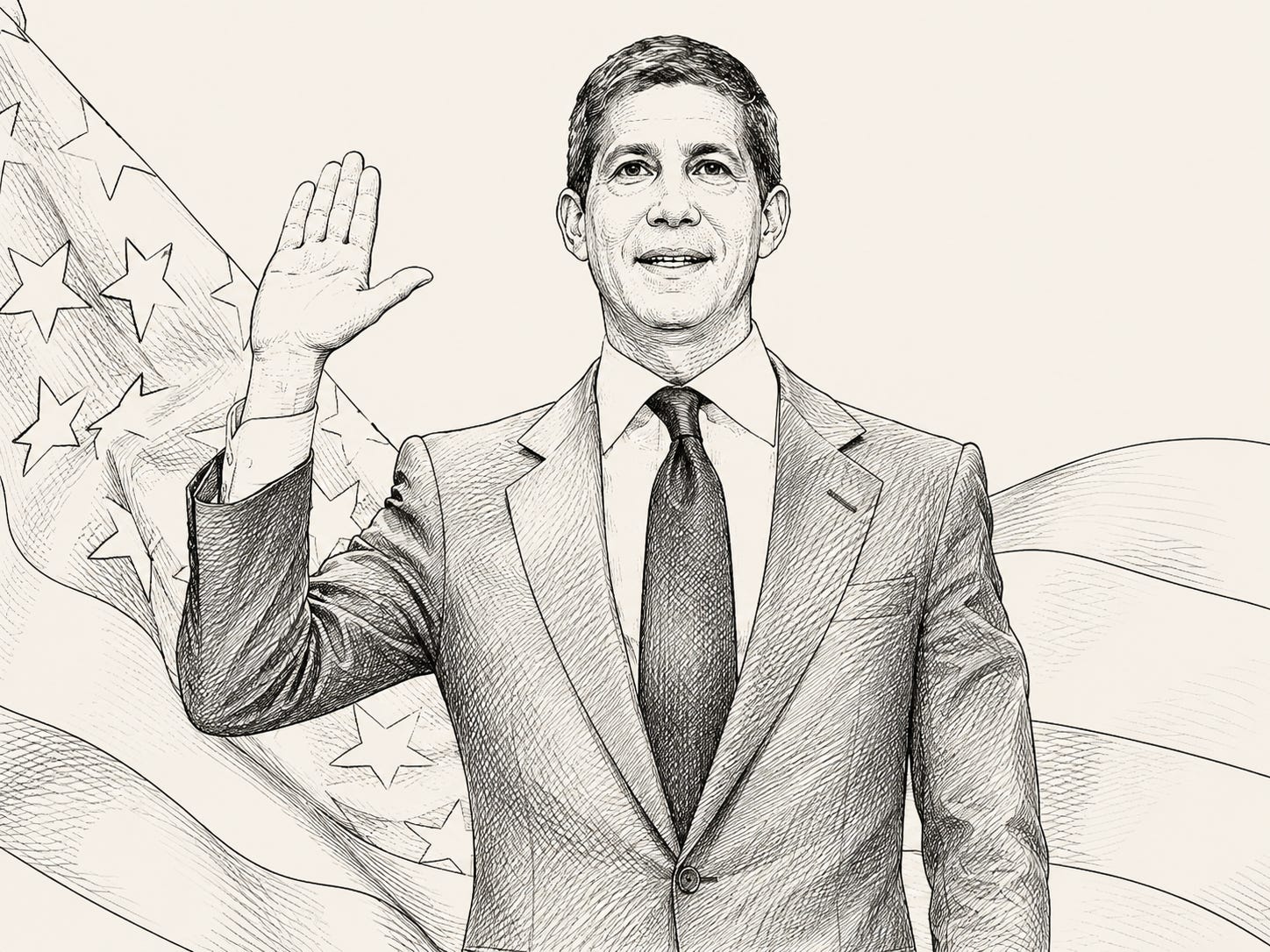
On May 22, 2026 Kevin Warsh was sworn in as the seventeenth chair of the Federal Reserve. Justice Clarence Thomas administered the oath, in the East Room of the White House. President Trump, standing beside him, offered a striking benediction: “I want Kevin to be totally independent and do a great job.”
Warsh has so far built his reform agenda around communication — shorter policy statements, a tighter message, a central bank more disciplined about what it signals to the public. He used the phrase “regime change” in his confirmation testimony to describe the overhaul he has in mind. A chair this attentive to signals opened his tenure with a loud one: the oath taken inside the White House, from a justice closely identified with one wing of American politics, surrounded by Cabinet officials and politically allied lawmakers.
There’s a temptation to read the staging as a verdict on his independence. Before yielding to it, consider Paul Volcker. In 1979 he took the same oath in that same East Room, with President Carter at the podium and the oath administered by a federal judge from Carter’s own side of the spectrum. Volcker then defied two presidents and broke the back of inflation at enormous political cost to both. Alan Greenspan, sworn in at the White House himself in 1987, later called Volcker “the most effective chairman in the history of the Federal Reserve.” The choice of setting made neither man a servant of the president beside him. A justice from either wing sends the same signal — which is to say, no reliable signal at all.
What matters is whether the person taking the oath will hold the line when a president leans on him. Volcker held it. Richard Nixon’s chairman, Arthur Burns, did not — he kept money loose into the 1972 election and helped touch off a decade of inflation. Same institution, same pressures, opposite spines. Effective monetary policy has always relied upon the independent streak of the person in the chair.
That is the vulnerability in the system. A central bank has no army and no budget of its own; its authority is almost entirely a matter of credibility. The public must believe that its decisions follow evidence rather than the wishes of whoever occupies the Oval Office. We guard that belief with norms, customs, and the character of individuals, and we are about to entrust it once more to the character of one individual.
The pressure on Chairman Warsh is not subtle. The president has said he wanted a chair who agreed with him on cutting rates. Warsh’s confirmation was the most divisive in the Fed’s modern history, 54 to 45, almost entirely along party lines. The nomination advanced only after a Justice Department investigation had shadowed outgoing Chairman Jerome Powell who has since chosen to remain on the Board of Governors rather than leave — a not-so-quiet signal that he feels the institution needs steadying.
The Fed was created by statute — the Federal Reserve Act of 1913. Its independence rests on even less: a 1951 handshake with the Treasury and decades of norm. None of it is constitutional. In an era of Congresses less eager to challenge a sitting president, does a century-old law and a 75-year-old understanding effectively guarantee independence?
My book proposes eleven structural amendments to the Constitution. One of them, A Right to Economic Competency, would lift the Fed’s independence out of dependency on norms and customs and into the founding document itself. The goals of the central bank would be clearly defined. Supermajority thresholds would be required for appointing and removing governors. Termination without cause would be prohibited. Leaving seats empty would no longer create any political advantage. Mandated audits and Congressional oversight would be preserved but clearly defined. The fundamental premise is that character can fail; a president can lean; a chair can fold. A structure well defined in the Constitution removes those risks and provides greater confidence that the actions of the Bank would be driven by competent, objective interpretation of market dynamics.
I hope Warsh proves to be more Volcker than Burns — that he turns out to be one of the most effective and most fiercely independent chairs the Fed has ever had.
Therein lies the problem. The strength of the dollar in my pocket, the rate on my mortgage, and the credit of the United States in every market on earth should not depend on my hope that the right person sits in the chair. Hope is not a system. A constitution can be.
